Sinxay UPSHIFTLuang Prabang
Zero Crew — a bottle exchange that pays it forward
Plastic bottle waste accumulating in schools in Luang Prabang, with no separation habit and no incentive to collect it.
Documented outcome
Read the full storyOne of three connected Project Sinxay tracks
From community problem to working prototype
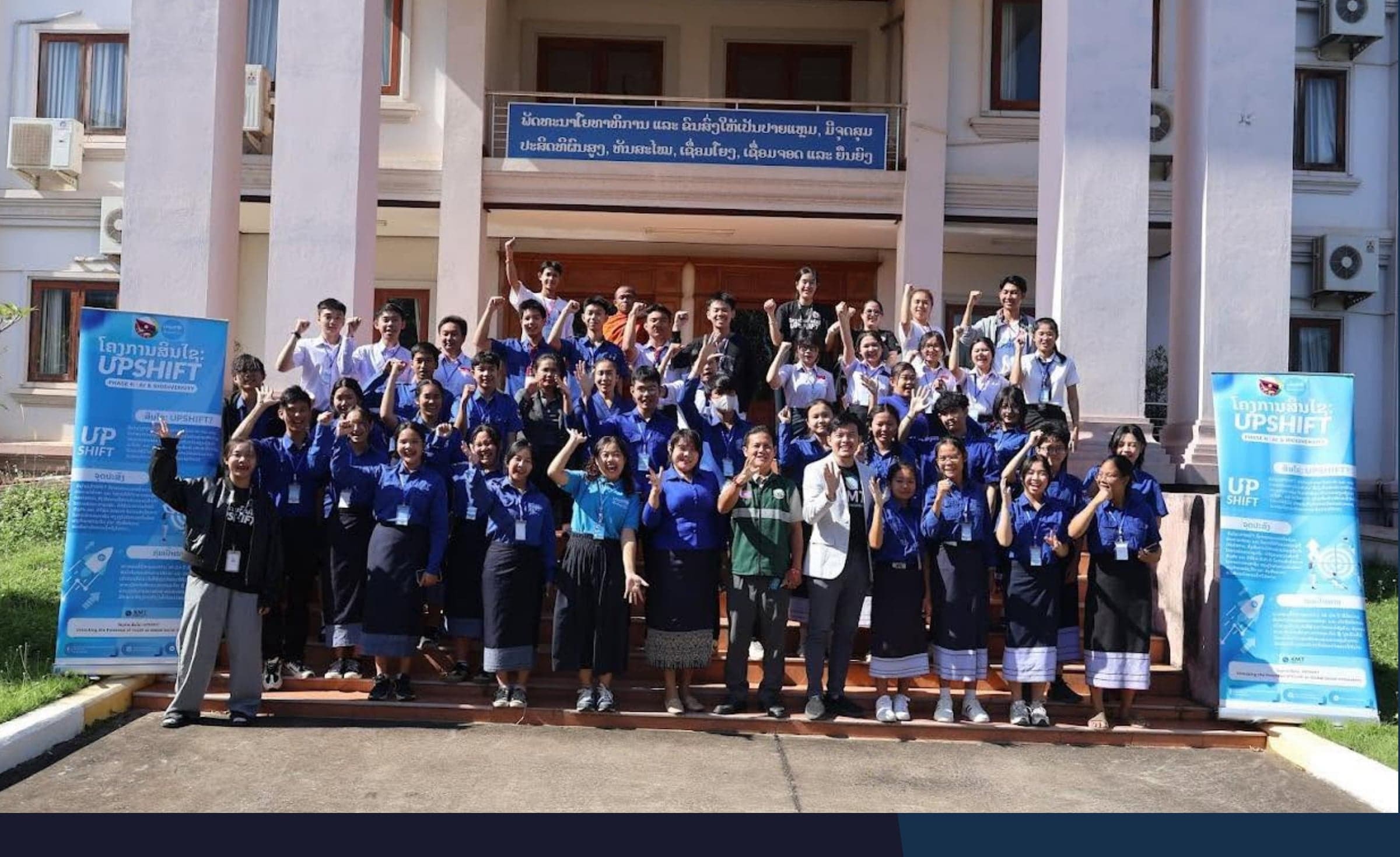
A youth entrepreneurship programme that equips young people with problem-solving, innovation and entrepreneurial skills, with the goal of developing a product, solution or initiative by the end of the project.
Sinxay UPSHIFT exists because the young people closest to a community problem, whether it is smoke from open burning, a clogged canal or overused fertiliser, are also well placed to help design a working response to it, given a clear process, mentorship and a small amount of funding to test an idea for real.
Young people aged 14 to 24 from schools and universities in the three provinces
Youth teams start by exploring a real problem in their own community and why it matters.
Teams talk to the people affected by the problem to understand it from different points of view.
Teams turn what they have learned into a clearly defined challenge they can design a solution for.
Teams generate and choose an idea that responds directly to the challenge they have defined.
Teams build a simple prototype of their idea and test it with real users before refining it.
Teams present their solution to a panel, explaining the problem, the idea and the evidence behind it.
Selected teams are paired with a mentor and receive seed funding to help develop their solution further.
Funded teams put their project into practice in their own community.
Documented photos from this track's own training sessions, workshops and community activities.
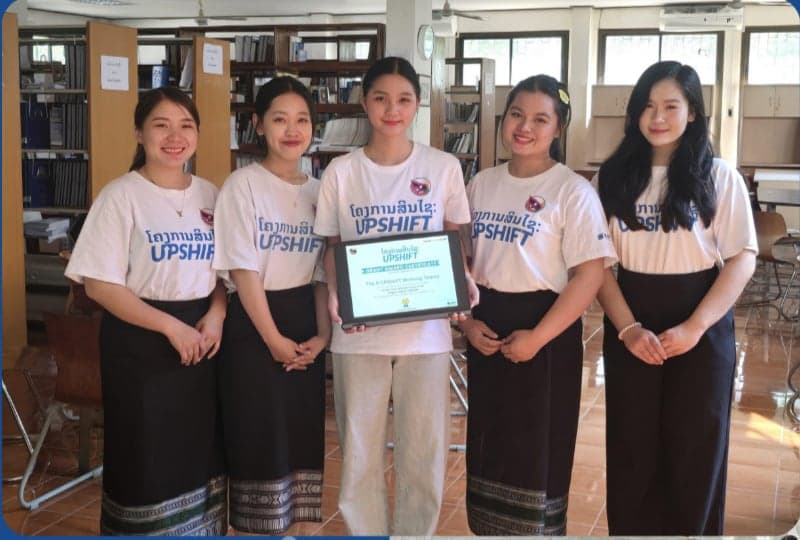
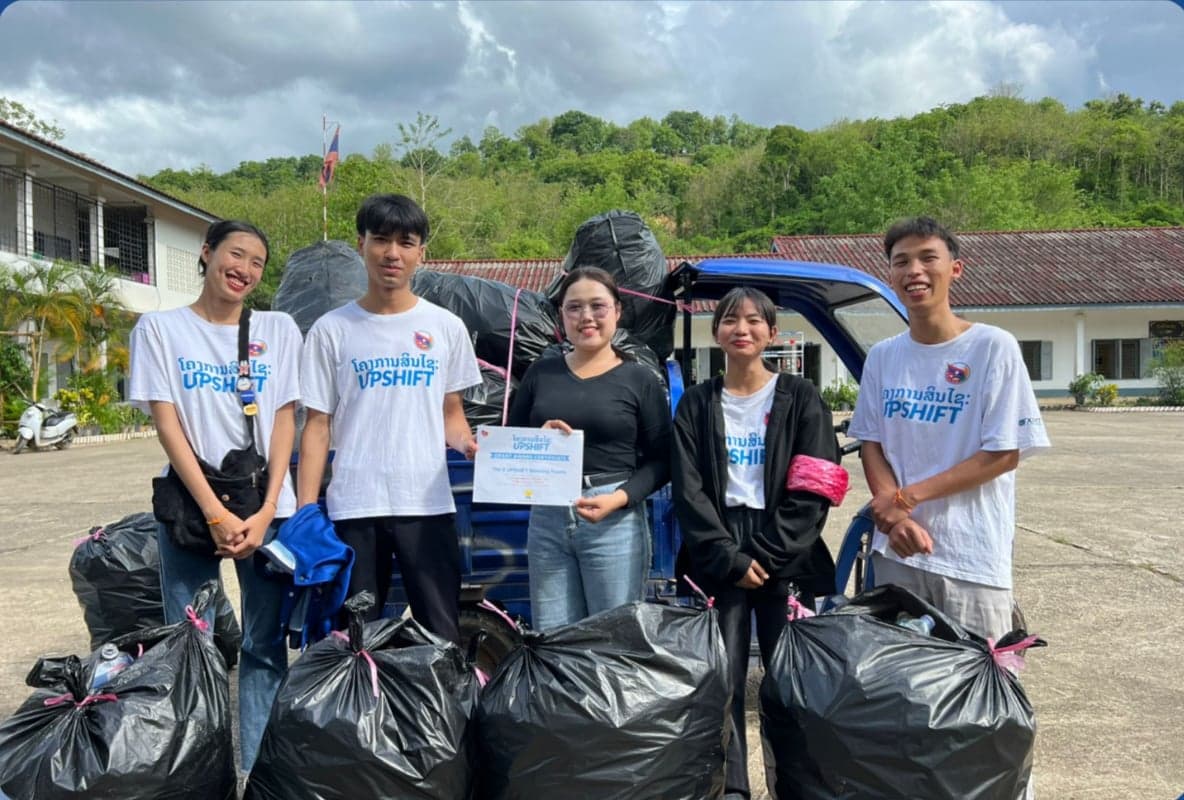
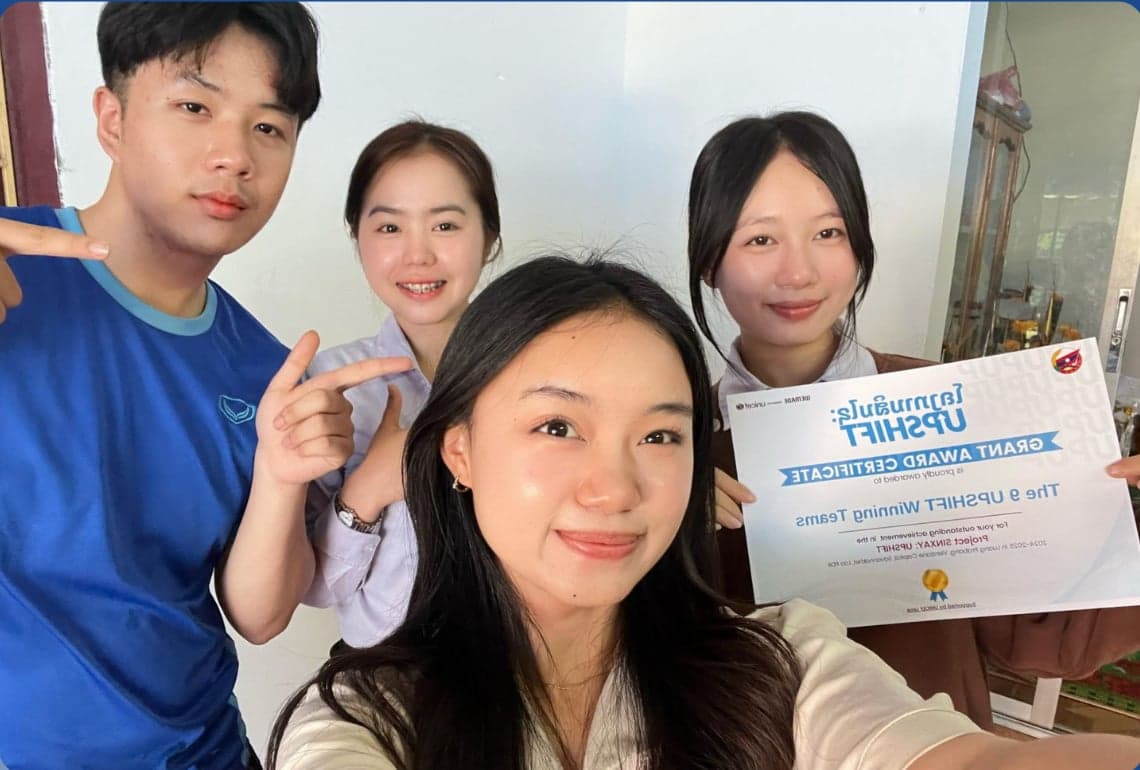
Examining a community problem from several angles before choosing a response.
Gathering evidence from the people affected by an issue rather than assuming their needs.
Turning a documented community issue — PM2.5 smoke, clogged canals, overused fertiliser — into a specific, testable response instead of a vague complaint.
Identifying who actually holds the problem and who can act on a solution, from market vendors and temple committees to district officials and university labs.
Building a working first version — a composting bin, an odour-absorbing bag, a soil sensor test — cheap and fast enough to try with real users before refining it.
Explaining a problem and a solution clearly to the audience that needs to hear it — students at a radio programme, vendors at a market stall, or a village training session.
Guiding a team — or, for a Sinxay Mentor, a younger cohort of advocates — through the parts of a project that stall, without taking the work away from them.
Speaking up for a change on a sensitive issue — child marriage, air pollution, sexual and reproductive health — in a school or community setting, with evidence behind the message.
Finding the shop, the media page or the donor that can carry a youth project further than the team can reach alone — as Eco Rice Straw did with two partner shops.
Keeping a multi-step activity — collecting, sorting, training, delivering — on schedule within a bootcamp's tight timeframe.
Turning a working prototype into something that can sustain itself — a stamp card, a small paper-bag business, a larvae-rearing income stream for families.
Using everyday platforms — a Facebook page to share soil results, a spreadsheet to track collected waste — to run and report on a project.
Understanding, at a basic level, what an AI tool can and cannot tell a team about their community problem — introduced alongside UPSHIFT Phase 2’s biodiversity theme.
Getting a small team — often five or six young people from the same school or district — to actually finish what they start together.
Working through the UPSHIFT cycle in order — understand the problem, define it, develop an idea, then test it — rather than jumping straight to a solution.
Gathering numbers a team can actually stand behind — kilograms of waste collected, soil samples tested, children reached at an activity.
Presenting a problem, an idea and the evidence behind it to a panel of judges, in the few minutes that decide whether a team receives seed funding.
Costing out materials — composting bins, water tanks, activated-carbon drums — within a small seed-funding budget.
One of UPSHIFT Phase 2's documented project themes — projects addressing species, habitat or ecosystem health, the largest single theme with eight projects.
The wider environmental pressure behind several documented project themes — PM2.5 smoke, drought-driven soil stress, flooding — named directly among Sinxay Youth Champion's advocacy topics.
The core practice UPSHIFT trains for: turning a community problem into a new product, service or initiative a team designs and runs itself.
Working alongside people outside the team's own age group — temple committees, market vendors, district officials, university lab staff — toward one shared result.
Illustrative skill map based on documented programme activities; not a participant performance ranking.
Plastic bottle waste accumulating in schools in Luang Prabang, with no separation habit and no incentive to collect it.
Documented outcome
Read the full storyThe Luang Prabang Morning Market produces a high volume of organic waste that affects hygiene and the area's image, with no established system to divert it away from landfill.
Documented outcome
Read the full storyLuang Prabang and Chomphet District increasingly suffer from harmful PM2.5 air pollution during the dry season, driven mainly by forest burning and wildfires, with particular impact on children and the elderly.
Documented outcome
Read the full storyCommunities around Vientiane generate organic wet waste with few practical ways to manage it, while temples — trusted and central to daily life for Lao people — were not yet being used as a channel for environmental action.
Documented outcome
Read the full storyCommunities in Vientiane generate wet waste with few good options for managing it, while families raising ducks, chickens and fish face rising costs for fertiliser and animal feed.
Documented outcome
Read the full storyFarmers in Xaythany District told the team about overuse of chemical fertiliser, too little organic fertiliser and nutrient imbalance in their soil — problems that lower yields, raise costs and degrade soil and water over time.
Documented outcome
Read the full storyRice farming is central to life in Sok Village, Savannakhet, but the traditional practice of burning leftover rice straw contributes to PM2.5 air pollution and damages soil quality in the area.
Documented outcome
Read the full storyResidents of Dong Dam Duan village frequently face foul-smelling canals clogged with trash; the blockage stops proper drainage during rainfall, causing flooding on roads and letting hazardous substances build up in stagnant water.
Implementation pending
Read the full storyUnpleasant odours are a pervasive, everyday problem — in homes, bathrooms, vehicles, schools and public spaces — and can also be a quiet signal of air pollution and overlooked health issues.
Documented outcome
Read the full storyF 107 · M 55
F 24 · M 28
As reported: 162 direct youth participants plus 52 teachers, officials and guests.
F 73 · M 37 · Prefer not to say 2
Hybrid Camp and In-person Camp attendance are reported separately. These two cohorts have not been confirmed as deduplicated, so these figures are not added together.
F 8 · M 5
F 83 · M 38
Hybrid Camp and In-person Camp attendance are reported separately. These two cohorts have not been confirmed as deduplicated, so these figures are not added together.
F 23 · M 24
Implementation is ongoing. This figure will be published when the implementation period closes.
Sinxay UPSHIFT · 2026
EN
XM Technovator for UNICEF Lao PDR
This report is being prepared for online reading. The source reference is available, but the downloadable file has not yet been connected.
Sinxay UPSHIFT is one of three connected Project Sinxay tracks. Explore the others, or see how all three fit together.